
So You’ve Been Asked To Make A Speech At An Event?!

Ready to get the crowd’s attention at Mary’s Place Opening Night 2025 Party at Fremont Studios. Photo By: Michael B. Maine
There are many, many resources out there for speechwriting and public speaking. Here are some of the best quick tips we recommend, tailored just for people making a speech at a fundraising event. Please feel free to share with all the folks who will speak in your stage program. Just a few simple steps to make sure every speech is super-strong!
How do I write a speech?
Don’t start by typing your speech out. Written language is very, very different from spoken language. If you begin by putting all your thoughts into full sentences and an essay format, you will end up sounding like you are reading an essay on stage. BORING.
Instead, start by writing three or four points of the things you want to cover. Then, turn on your voice-to-text dictation on any device, and TELL the world about it. This is the fastest way to be sure the language really sounds like you, and flows in an organic rhythm when spoken out loud.
Then, you can read the transcript, and make edits in the text as you have written it. You will need to condense and edit it down, until it fits into the time you’ve been asked to speak. Soon, you will have a written script for your speech that is perfectly “in your voice”, and you can deliver with clarity.
As you finalize your remarks, read the whole thing out loud again and time it, while leaving breaks for audience reactions like laughter. You may need to edit it down further — it’s a pro move to make sure you are about 1 minute under your allotted time to allow for natural pauses and movement on stage. Your story will almost certainly be more powerful when you share a shortened, well-edited version: remember, in show biz we always say “leave ‘em wanting more”.
How do I make it meaningful?
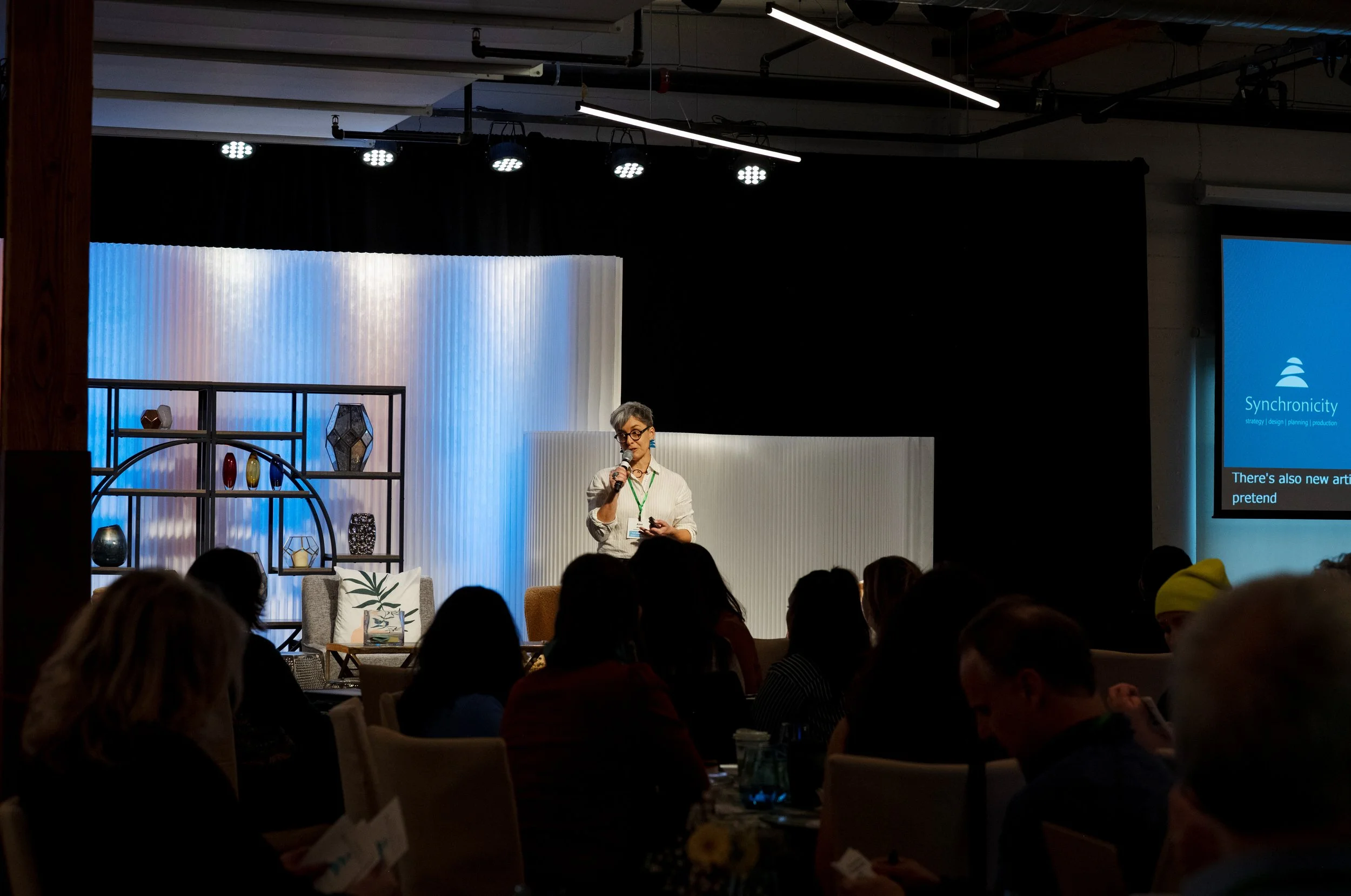
Synchronicity Events’ Founder, Alex Martin at the Nonprofit Events Mini-Con 2026 held at Block 41. Photo by: Barbie Hull
First you need to decide: what kind of emotional energy do you want the audience to have during your remarks? Are you trying to calm them down and make them reflect on something? Or rally their energy up towards an action? Are you trying to entertain and leave them chuckling? A common practice is to give your audience a little bit of humor or lightheartedness in the beginning, to put them at ease before telling a darker or heavier part of your remarks. Practice your speech a few times, with a friend or family member and ask for feedback (ask questions like “how did you feel when I told that part of the story?” “were there any places where you felt confused?”), observe their reactions, and edit accordingly.
How do I finish strong?
Give extra care to the END of your remarks. Is there one thought that you’d really like your audience to take away, or an action you want them to take? Make sure to end with that feeling or that idea, and give it proper emphasis.
And at the very end, make sure to say some little phrase to let people know you have finished, so they can be free to start applauding. “Thank you” is always a good choice for final words.
How do I banish stage fright?
Personal practice: go ahead and practice your speech 10 times - all the way through, speaking out LOUD at normal volume – before event day. Whether you memorize your remarks or read them, you will feel super-strong and ready. Practice has a way of eliminating your stage fright!
Remember, the performers you love watching on stage have practiced their songs, speeches and dances for months before they go on tour. Nobody is out there “winging it” and you don’t have to, either.
If your event is holding a rehearsal, ATTEND IT! There’s nothing better than hearing the other speeches being planned for that day, and understanding how your story fits in with the whole stage program. Meeting the other speakers in advance will help ease your nerves and give you a sense of camaraderie in the event. As you listen to others rehearse, be ready to make little tweaks to your speech, to be sure you aren’t duplicating or contradicting what others will say.
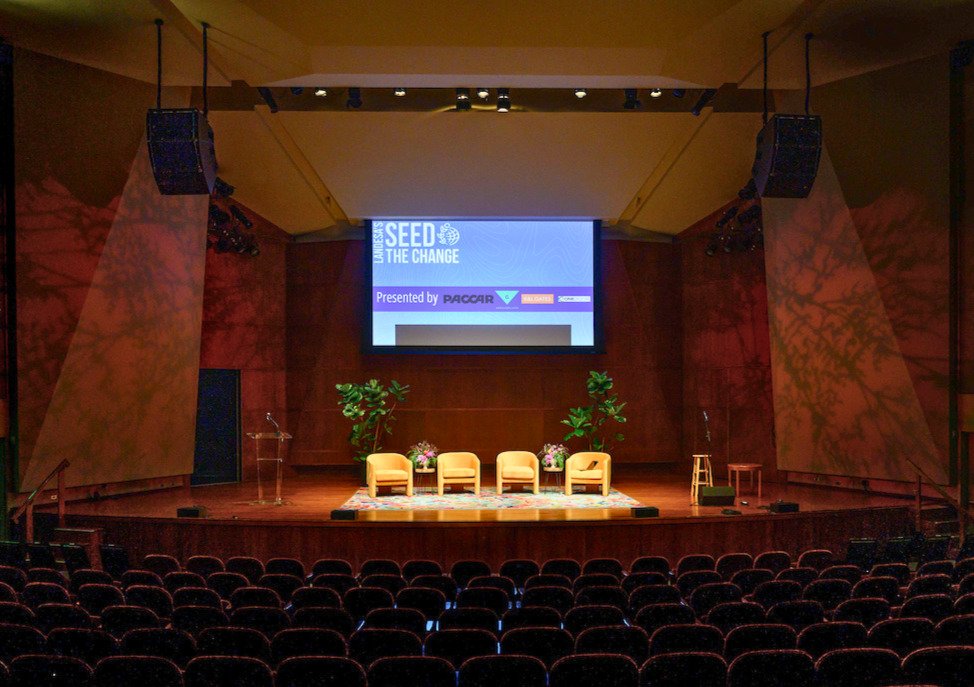
A glimpse of what it looks like before the program starts at Landesa’s Seed the Change 2026 held at Benaroya Hall. Photo by Michael B. Maine
What do I do on event day?
On event day, bring your speech printed out in LARGE font (please, if we can convince you of just one thing - bring a printout. Don’t pull the amateur move of trying to read from the screen of your phone).
Wear clothing and shoes that make you feel wonderful, elegant and comfortable. Dangling jewelry or hair accessories can put “clicking” and “jingling” sounds through the microphone, so if that’s your style be ready with a less jangly back-up option just in case.
If your hosts haven’t offered you a chance to do a “sound check” or “onstage check” on event day, ask for it! Arrive a little before the doors open so you can get the feel of the room before meeting your audience. You will feel so much more comfortable if you have a chance to walk up on the stage and get a feel for the sound, lights, lectern and microphone before the time of your speech.
Be ready to work with whatever microphone is offered: if it’s a mic on a stand, take the time to adjust the microphone so it’s as close as possible to your mouth, so your words can be heard. If it’s a handheld mic, get used to the feeling and weight of it, and ask the sound engineer to give you tips on how to hold it. If it’s a small mic that gets clipped to your clothing, make sure you feel comfortable with where it is placed and understand how it works. The stage lights will probably feel uncomfortably bright: find places in the room where you can let your eyes “land” and not be blinded (the Exit signs are often visible when everything else is a field of black). The first time you hear your voice coming back through the sound system, it will likely distract you, so take your time. Keep talking and listening until you adjust to hearing your amplified voice.
Now relax, take your time, and give your speech. Remember, this audience came here to hear YOUR story. It’s going to be wonderful!
#TeamSynchronicity #eventplanning #eventprofs #seattleevents #nonprofitevents